

How to Compute Expected Daily Sales of Coffee Shop in the Philippines
Knowing your numbers is one key to growing your cafe business. Whether you’re an aspiring coffee entrepreneur or an established one, you should know the expected daily sales of your coffee shop in the Philippines.
Expected Daily Sales of Coffee Shop in the Philippines
Daily sales are among the first numbers to track when managing your coffee shop. By knowing how much cash and non-cash transactions go into your store from any purchase transaction, you’ll get to know if the cafe business is thriving or not.
Daily sales knowledge allows you to be more flexible and adaptive to every change happening in your local market.
For instance, if you know that your weekends must have an average daily sales of Php 15,000 to Php 25,000, and you find out four consecutive weekends to be lower than your expected daily sales, you could now make adjustments either with the quality of coffee you brew (to get returning customers), or promote even better to acquire new coffee lovers.
You can’t simply ignore knowing your expected daily sales, as this can help guide your rational decision in running and sustaining your cafe.
9 Easy Steps to Compute for Daily Sales of Coffee Shop
Now, let’s proceed to how you can compute the daily sales of coffee shops.
1. Record Every Sale
You first need to have a recording of every transaction in your coffee store.
The most convenient and effective way is to have a point of sale (POS) system so your baristas can easily input transactions on a tablet or any compatible device.
Tip: We use Utak POS in our coffee shop in Bulacan. It is an affordable POS in the Philippines (we don’t get commissions for recommending them).

There are also alternatives to POS, such as a cash register or manual recording system to track every sale made during the day.
See what fits your cafe, but I highly recommend investing in a POS to efficiently track numbers and monitor daily sales when you’re not around the cafe.
2. Categorize Sales (optional but helpful)
This step is optional, and you may skip this. But if you want to be more detailed about the sales numbers, you can break down sales into categories such as beverages, pastries, and merchandise.
This way, you can determine which products are popular (best-selling for the month) and profitable.
3. Tally Up Total Sales
To get the total sales, you sum up the total amount from all sales transactions. This includes all transactions from every product you sell within the day. This will give you the gross sales for the day.
4. Deduct Returns/Refunds
Check if there were any returns or refunds during the day. If you have delivery apps like FoodPanda and GrabFood, you can check your emails for any refunds within the day.
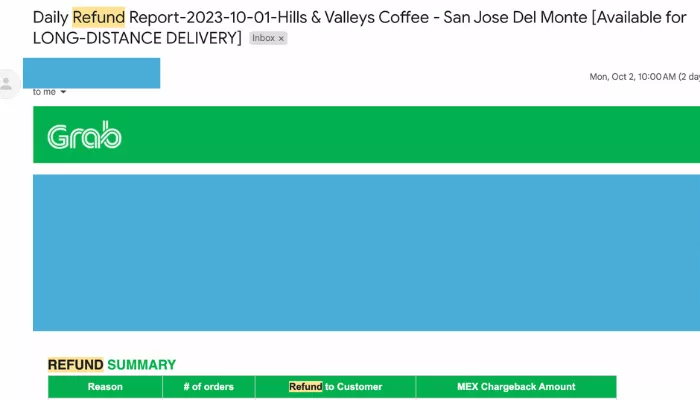
Deduct these amounts from the gross sales to get the net sales.
5. Factor in Discounts and Promotions
If you offer discounts or promotions, account for these reductions in your daily sales.
See the exact amount of each discount and promotion. This would give you the right amount of daily net sales.
6. Include Taxes
Cross-check that taxes are included in your sales amount among your POS and cash registers.
For the most part, taxes are shown separately in receipts, so adding them can quickly get the total sales.
7. Review Cash and Non-Cash Transactions
Review the total for each type if you accept multiple payment methods (e.g., cash, bank accounts like BPI, credit card, Gcash). This ensures your cash drawer matches your recorded cash sales and all electronic transactions have been processed correctly.
8. Double check
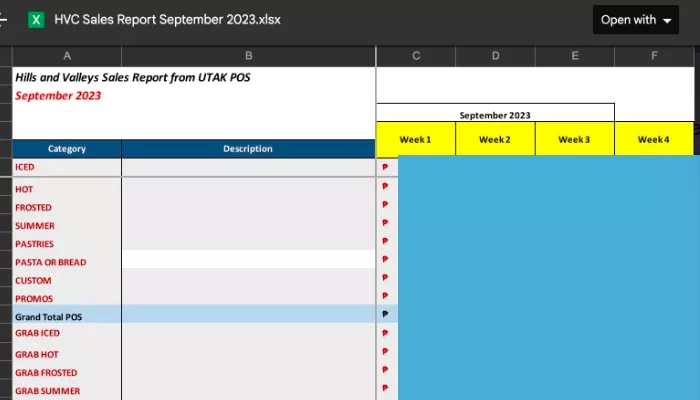
It is easy to lose track of the accurate amount. So, it is always an excellent practice to double-check your calculations. If you’re using a POS system, it could give you a daily sales report that looks like this:
You can cross-reference the total amount from POS with manual counts.
9. Document and Store
Ensure you document everything in your cafe business, including your daily sales. You can use spreadsheets, your POS system output reports, or as simple as a physical ledger.
All these documents you can use for accounting and tax purposes, as well as in tracking business performance.
How to Increase Daily Sales Of Your Coffee Shop?
Now that you know how to compute and track your daily sales, applying some of the best practices to increase daily sales is also essential.
Of course, tracking your numbers is good, but more importantly, you should sustain and grow your cafe business even more.
So, here are five ways to increase daily sales of your coffee shop:
1. Find a location with high foot traffic.
This is primarily applicable for starting cafe owners as they have the freedom to choose a store with good traffic of customers.
An established coffee entrepreneur who wants to expand their coffee shop in other locations (either through coffee franchising or a company-owned system) must be looking for a place with high foot traffic.
2. Build your brand.
In Asian countries, particularly in the Philippines, you’ll find coffee shops opening streets in between.
You need to build your brand to differentiate yourself from other local cafes. Ask yourself, “What makes your cafe uniquely different?”.
By focusing on branding with all your marketing efforts, you gain buzz around your local cafe, acquiring new customers and enticing loyal customers to make additional purchases.
Learning and applying fundamentals and tips on promoting your coffee shop is best.
3. Do competitor analysis.
One of the best ways to increase daily sales is to analyze what your competitors are doing.
This is not to mimic every detail of their business activity but to see their strengths and weaknesses, all while spotting opportunities you can take advantage of.
For instance, one audience group we managed to build stronger and deeper relationships with at Hills & Valleys Cafe - teachers. They usually conduct their meetings inside our cafe, allowing us to get recurring bulk orders every week. It also gives you free word-of-mouth marketing within the campus community.
Here are a few insights you can get from doing competitor analysis:
- Gaining traction on a specific platform or marketing channel your competitors aren’t investing in.
- Targeting a group audience (example above), other cafes aren’t strengthening relationships with.
- Promotional activities that have worked for them that you can innovate better to suit your target audience.
Competitor analysis is critical in enhancing your cafe’s branding and ability to capture a larger market share for your business.
4. Maximize the seasonality of products.
One significant insight in managing your coffee shop is understanding the seasonality of your products. You’ve got a primary menu, but there are seasonal beverages that are best to sell during one season.
For instance, you have a Peppermint beverage, suitable for the Christmas season, and another, a Refresher drink, best for the summer season.
You can maximize these seasonal products by creating promotional campaigns like BOGO to entice early sales for the day.
5. Adjust the pricing on offers.
A coffee shop's day-to-day operations may seem routine, but at times, you don’t take the time to pause, reflect, and evaluate what’s happening in your store.
Adjusting the offers' pricing is a good tip to increase expected daily sales. Remember that you should do it cautiously, as your customers might find that you’re taking advantage of them, which could negatively impact sales.
The best thing is to find the right timing when increasing prices for some of your products. For example, when you see inflation happening in some of the ingredients of your products, it is a good, reasonable way to adjust your pricing.
Announce the price adjustment. It is imperative to do it so your customers would know beforehand - a sign of respect for them as your loyal customers.
Key Takeaways
Knowing your numbers is one of a cafe entrepreneur's incredible, essential abilities. By having a good look at your expected daily sales, you can think of any improvement to do for your cafe operations and sustain to expect even more growth.


Why Franchising is a Smart Business Solution?
One of the major breakthroughs that COVID-19 made for entrepreneurship is that it opened doors for people to start their own businesses, either by establishing their own brands or through franchising.
Franchising, at its core, offers a proven path to business success, attracting many who seek low-risk, high-reward opportunities.
By combining an established brand presence with a proven business model, franchising helps reduce the risks and uncertainty associated with starting and running a new venture.
Here are the primary reasons why franchising is a smart choice for aspiring business owners.
Why Franchising is a Smart Business Solution?
1. Proven Business Model
Franchises operate on tried-and-tested systems. When you invest in a franchise, you gain access to a business model that has already succeeded. This eliminates the trial-and-error phase that new businesses typically face. The franchisor provides detailed operational guidelines, ensuring you know how to run the business effectively from day one.
For instance, if you’re looking for a coffee shop franchise, it already offers step-by-step instructions on brewing coffee, setting up the store, managing inventory, and training staff. These systems are in place and designed to replicate the success of existing franchise locations.
Hills & Valleys Cafe, for example, provides an operations manual for franchisees, covering everything from brewing every item on our menu to training staff on customer services. This manual lays the foundation for creating a consistent quality and flow of operations that help the new franchised store stand in its first weeks after opening.
Whereas if you’ll be starting your own coffee shop business, you’ll be investing months, if not years, in the research and development of beverages you’ll include as part of your menu.
2. Brand Recognition
One of the most significant advantages of franchising is the power of an established brand. Building a brand from scratch can take years, requiring extensive marketing efforts and consistent quality. With a franchise, you start with a brand that customers already know and trust.
For instance, opening a fast-food franchise like McDonald’s means customers are already familiar with the menu and quality. This instant recognition leads to faster customer acquisition and higher sales than an unknown startup.
When a brand is recognized, it’s surefire for sales, unlike startups that still have to increase their brand awareness, whether through offline or digital channels.
Our coffee shop franchise has been around for years, so our customers know exactly what we offer—the consistent quality of products we offer. This leverage helps our franchisees bank on, giving them a headstart over other competing coffee shops within their locations.
3. Training and Support
Franchisors provide comprehensive training and ongoing support.
New franchisees receive training in operations, marketing, and customer service. This ensures you have the knowledge and skills needed to succeed, even if you lack prior experience in the industry.
Support extends beyond the initial setup. Franchisors often assist with marketing campaigns, technology updates, and troubleshooting. This support network helps franchisees overcome challenges and stay competitive.
Pro Tip: Franchising training and support is the main difference between successful franchisors and mediocre ones.
Others would plainly sell features and items you’ll get from their franchise packages. For the most part, these are all basic. However, a good franchisor would delve deeply into franchising support - what, when, and how they would conduct audits, for example, and how they could market your stores through digital channels.
4. Lower Failure Rates
Franchises have a lower failure rate compared to independent businesses. This is due to the structured systems, established brand, and ongoing support franchisors offer. Research shows that franchise businesses are more likely to succeed, making them a safer investment. That’s also why many Filipinos now invest in coffee shop franchise.
For example, an independent restaurant might need help attracting customers in its first year, while a franchise benefits from established branding and marketing, ensuring a steady flow of customers from the start.
In fact, one out of ten businesses only survives in the first year. Starting your brand with your own concept requires not only making products available to the market but also solidifying trust and sustaining success in your first months of operations.
5. Economies of Scale
Franchises benefit from economies of scale. As part of a more extensive network, franchisees can access bulk-purchasing discounts for inventory, equipment, and raw materials. This reduces operational costs, increasing profitability.
For instance, a franchise chain may negotiate discounts with suppliers for all its locations. As a franchisee, you gain access to these lower costs, which would take a lot of work to achieve as an independent business owner.
Through economies of scale, franchised stores can benefit from lower costs and increased monthly profits.
I’ve seen this with the local franchise environment in the Philippines, where one franchisee would offer two or more franchise packages in different locations, getting more discounts from the franchisor. It’s only one good tip if you have significant savings to put into the franchise business.
6. Marketing Power
Franchisors manage large-scale marketing campaign that can benefit all franchisees. These campaigns include national or regional advertising, social media promotion, and digital marketing strategies.
As a franchisee, you contribute to the marketing fund and gain access to professional campaigns that drive customer traffic.
For example, a coffee shop franchise may run national TV commercials or social media ads. This increases brand awareness and attracts more customers to your location without needing individual marketing efforts.
Marketing drives more sales to each store. Having this in place with your franchisor's in-house marketing team is a leverage you can take advantage of as it amplifies your franchised store.
Another thing most potential franchise owners miss is that whenever new franchise stores are added to the mix, they serve as a marketing platform to increase brand awareness.
7. Flexibility in Ownership
Franchising allows flexibility in business ownership. You can choose a franchise that matches your interests, skills, and financial goals. From food and retail to fitness and education, franchises are available in almost every industry.
For example, if you are passionate about fitness, you can invest in a gym franchise. If you love technology, choose a computer repair franchise. This flexibility makes franchising appealing to a wide range of entrepreneurs.
Pro Tip: Choose a franchise package that fits your interests or skills. You should be able to manage the franchise store with at least a basic understanding of the industry.
Your franchisor can help you understand more about the business and the industry.
8. Scalable Growth
Franchising offers opportunities for scalable growth. Once you successfully manage one franchise, you can expand by opening additional locations. Many franchisees build wealth by managing multiple units.
For instance, a franchisee who starts with one pizza restaurant may eventually own several locations in different cities. This scalability allows you to grow your income while leveraging the same proven systems.
The ability to scale your business opportunities is higher than starting your own brand. As you get more initial profits from early investment in franchising, you can invest it toward new franchise stores you want to set in.
9. Compliance and Legal Support
Starting a business involves navigating legal requirements and regulations. Franchisors provide guidance on compliance, ensuring franchisees meet local laws and industry standards. This reduces the risk of legal issues and allows you to focus on running the business.
For example, a retail franchise might offer support with licensing, permits, and health regulations. This saves time and ensures your business operates legally and smoothly.
At Hills & Valleys, we support our franchisees with the basic government permits and licenses to operate the franchise store. Our in-house team will help with any consultation regarding legal and compliance support.

10. Access to Financing
Franchises often have better access to financing. Because of their established track record, lenders view franchise businesses as lower-risk investments. Some franchisors also offer financing options or partnerships with financial institutions.
For instance, a franchisor may have agreements with banks to provide loans for franchisees. This makes securing funding for your initial investment and startup costs easier.
11. Built-In Network
Franchisees are part of a broader network of business owners. This community offers opportunities for collaboration, knowledge sharing, and mutual support. Regular franchise meetings and conferences provide platforms to learn from others’ experiences and exchange ideas.
For example, a restaurant franchise may host an annual conference where franchisees share tips on improving operations or boosting sales. This sense of community adds value to the franchising experience.
The best thing about meeting other franchisees is expanding your business network, which would open new opportunities for you to open other lines of ventures (besides your franchise businesses).
12. Predictable Revenue
Franchises often have predictable revenue streams due to established demand and customer loyalty. This predictability helps franchisees plan expenses and manage cash flow effectively.
For instance, a well-known coffee franchise may experience consistent daily sales, which provides stability and reduces the owner's financial stress.
If you can predict revenue, you know how much initial monthly profits you can make. This helps build self-confidence as a business owner and enables a sustainable income, even if you have full-time or other businesses.
13. Adapting to Market Trends
Franchisors continuously innovate to keep up with market trends. This ensures the brand remains competitive and relevant. As a franchisee, you benefit from these innovations without investing time or resources in research and development.
For example, a food franchise might introduce plant-based menu options to cater to changing consumer preferences. Franchisees implement these updates, ensuring their business stays ahead of competitors.
Franchisors typically have an R&D (research and development) team that generates new insights for potential products and improves current ones on the menu.
14. Minimized Risk
Franchising minimizes risks associated with starting a business. Investing in an established brand with a proven model reduces the chances of failure. This makes franchising an attractive option for first-time entrepreneurs and seasoned investors alike.
For instance, an independent startup may face challenges in market penetration, while a franchise benefits from an existing customer base and operational framework.
15. Work-Life Balance
Many franchise models allow for better work-life balance. Some franchises offer semi-absentee ownership options, where managers handle day-to-day operations. This will enable owners to focus on strategic growth or other personal pursuits.
For example, a laundromat franchise may require minimal owner involvement, freeing up time for other activities while still generating income.
Franchising As A Smart Business Solution
Franchising is a smart business solution for those seeking a proven path to success. With its established systems, brand recognition, and ongoing support, franchising reduces the risks of starting a business. Whether you are a first-time entrepreneur or an experienced investor, franchising offers growth, stability, and profitability opportunities.
By choosing the right franchise and following the provided systems, you can achieve business success while enjoying the benefits of an established network and brand. Franchising is not just an investment but a strategic move toward long-term growth and financial independence.